Home > NEWS > Industry Information > Views
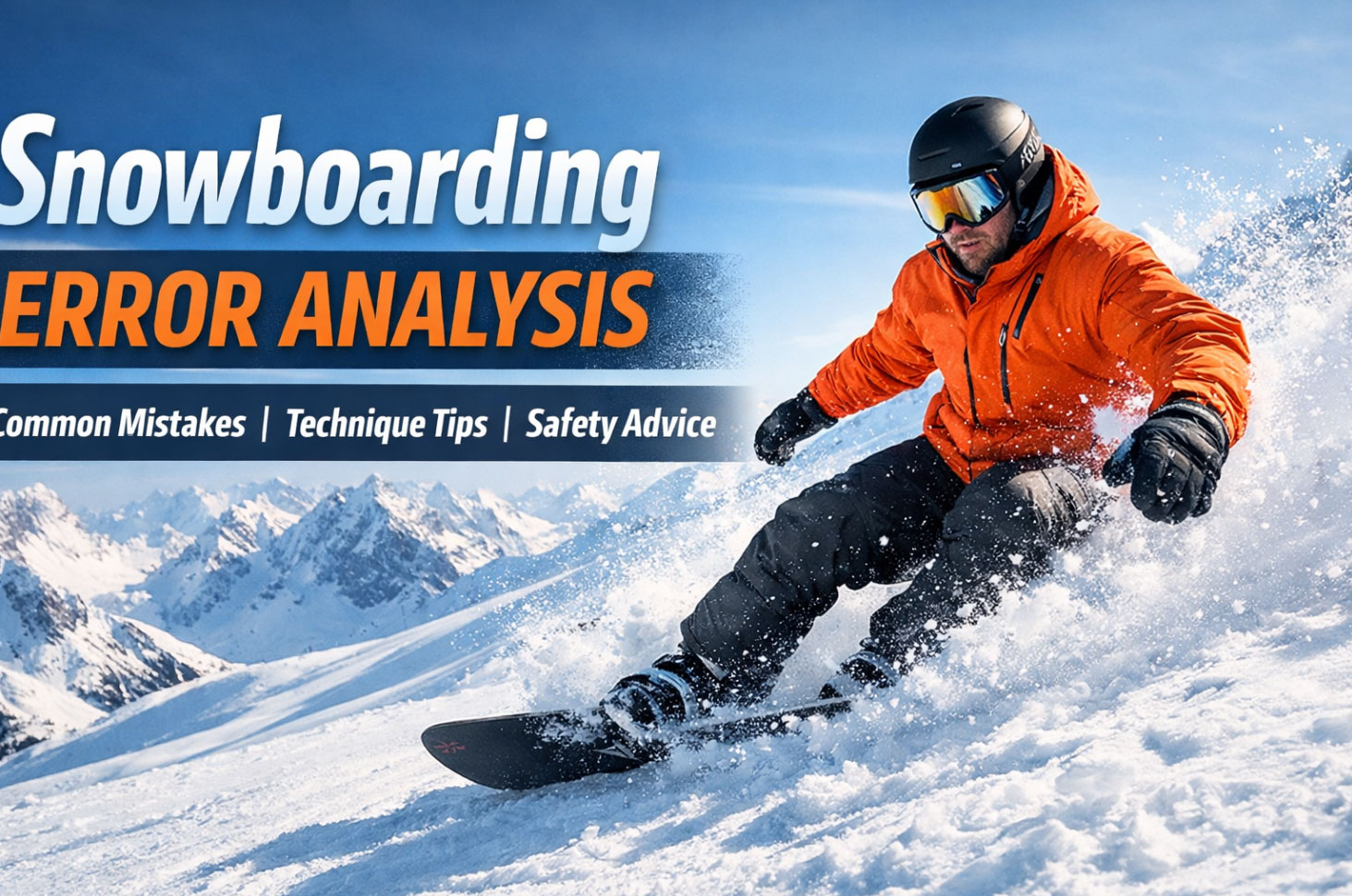
Snowboarding is a winter sport that combines speed, technique, and balance. Due to its high degree of freedom and diverse movements, it is widely favored by skiing enthusiasts. However, because snowboarding places high demands on physical coordination, center-of-gravity control, and terrain judgment, beginners and intermediate riders often make various technical mistakes during practice. These mistakes not only affect riding performance but also increase the risk of injury. Therefore, analyzing common errors in snowboarding is of great significance for improving skill levels and ensuring safety.
Many beginners become tense while riding, causing their bodies to remain stiff and preventing the knees and ankles from bending naturally. This reduces the board’s ability to respond to terrain changes and easily leads to loss of balance or falls. The correct approach is to keep the knees slightly bent and the body relaxed, allowing the body to act like a “shock absorber” that adapts to variations in the slope.
Incorrect center-of-gravity positioning is one of the main causes of falls. Leaning too far forward can result in catching the front edge, while leaning backward makes the nose of the board too light and difficult to control. Ideally, the rider should keep the center of gravity balanced and the body relatively perpendicular to the snowboard.
Some riders rely on twisting their shoulders or arms to initiate turns, neglecting the role of the lower body and board edges. Although this “shoulder-driven turning” can change direction in the short term, it lacks stability and can easily lead to loss of control. Proper turning should be achieved through coordinated movements of the ankles, knees, and hips.
Common beginner mistakes include hesitation to apply edge pressure or applying excessive pressure. Insufficient edging causes the board to skid, while excessive edging can result in sudden edge catching and falls. Proper control of edge angle and pressure is essential for smooth and controlled turns.
Although skidding is a basic method of slowing down, frequent use disrupts riding rhythm and hinders technical improvement. Riders should gradually learn to control speed through S-shaped turns, making riding smoother and safer.
Some riders accelerate without fully assessing slope steepness or their own skill level, which can easily lead to loss of control at high speeds. The correct approach is to observe slope conditions in advance and choose routes that match one’s ability.
Failing to wear protective gear such as helmets and pads is a common mistake among beginners. In the event of a fall, this greatly increases the risk of unnecessary injuries.
Improving snowboarding skills requires gradual progression. Rushing to learn advanced techniques often produces the opposite effect and may even lead to dangerous situations. Maintaining a positive mindset and practicing fundamental skills patiently are especially important.
Most snowboarding errors stem from insufficient technical proficiency, improper control of the center of gravity, and inadequate safety awareness. Analysis of these common mistakes shows that proper basic posture, correct turning techniques, effective speed control, and a sound psychological state are key factors in improving snowboarding performance. Riders should continuously reflect on their experiences and correct errors in practice in order to truly enjoy the sport while ensuring safety.