Home > NEWS > Industry Information > Views
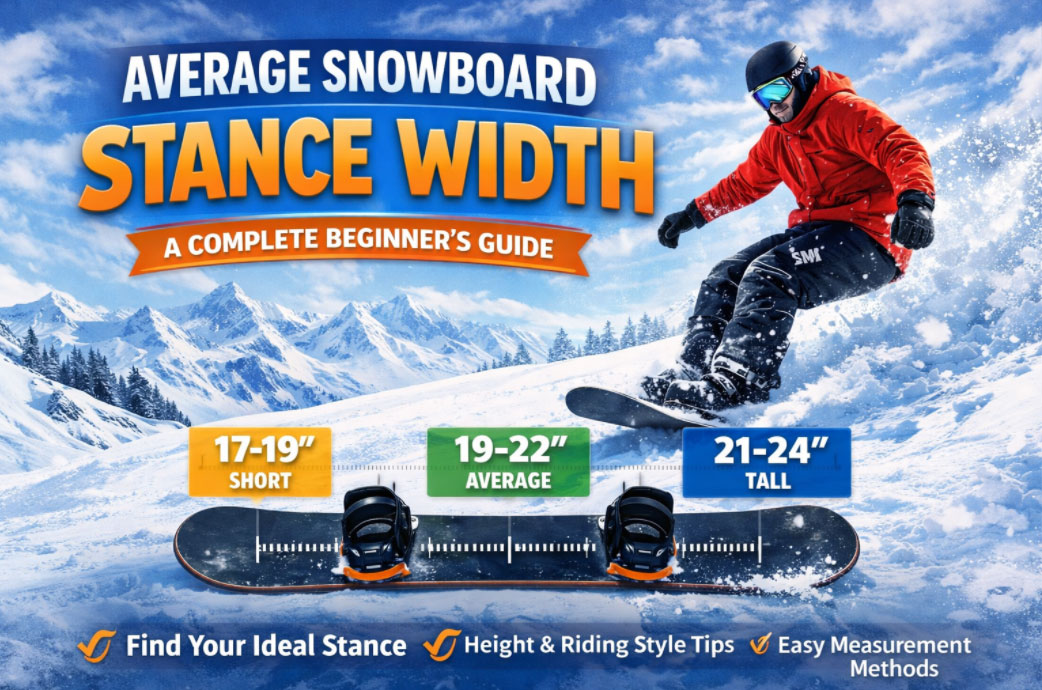
Snowboard stance width refers to the distance between your front and back bindings on the snowboard. This measurement plays a major role in your balance, stability, and overall control while riding. A properly set stance width can improve turning, reduce fatigue, and help you ride more confidently across different terrain.
Choosing the correct stance width depends on several important factors:
2.1Rider Height
Height is one of the most reliable starting points. Taller riders usually require a wider stance for better leverage and stability, while shorter riders often feel more comfortable with a narrower setup.
2.2Riding Style
2.2.1Freestyle riders typically prefer a slightly narrower stance for easier spins and tricks.
2.2.2Freeride and all-mountain riders benefit from a medium-width stance that balances stability and maneuverability.
2.2.3Powder riders often choose a wider stance to improve float and control in deep snow.
2.3Personal Comfort
No chart or formula replaces personal comfort. The best stance width is the one that feels natural to your body and allows smooth, controlled movement.
A widespread misconception is that there is a “perfect” stance width that works for everyone. In reality, stance width varies based on body type, riding goals, and personal preference. Testing and adjusting your setup is essential for finding your ideal stance.
4.1Start With Shoulder Width
Stand naturally with your feet shoulder-width apart. This position often serves as a reliable baseline for most riders.
4.2Use Height as a Reference
Height-based recommendations help narrow down a starting range. From there, small adjustments can make a big difference in comfort and performance.
4.3Test and Adjust on Snow
Make small changes—about 1–2 cm at a time—and ride a few runs after each adjustment. Pay attention to how your balance, edge control, and turning feel.
5.1Shoulder-Width Method
Measure the distance between your feet when standing shoulder-width apart. This is a practical and easy starting point.
5.2Knee-to-Foot Measurement
Measure from the center of one knee to the center of the opposite foot. This method helps create a biomechanically balanced stance.
5.3Jump Test
Jump straight up and land naturally. Measure the distance between your feet when you land—this often reflects your body’s natural stance width.
These ranges are general guidelines and should be adjusted based on comfort and riding style:
6.1Short Riders (Under 51 / 155 cm)
17–19 inches (43–48 cm) Offers good control and maneuverability.
6.2Average-Height Riders (52–58 / 156–172 cm)
19–22 inches (48–56 cm) A versatile range suitable for most riding styles.
6.3Tall Riders (Over 59 / 173 cm)
21–24 inches (53–61 cm) Provides added stability and balance for taller riders.
Small adjustments can lead to noticeable improvements
Comfort always outweighs charts and formulas
Revisit your stance as your riding level improves
Finding the right snowboard stance width is a process, not a one-time setup. Take the time to experiment, listen to your body, and fine-tune your stance to unlock better performance on the mountain.